Grafana Confirms Code Theft in Supply Chain Attack
Popular monitoring platform Grafana has disclosed that its source code and other data were stolen in a sophisticated supply chain attack. The breach occurred through a third-party library, TanStack. What does this mean, and how might it affect you?
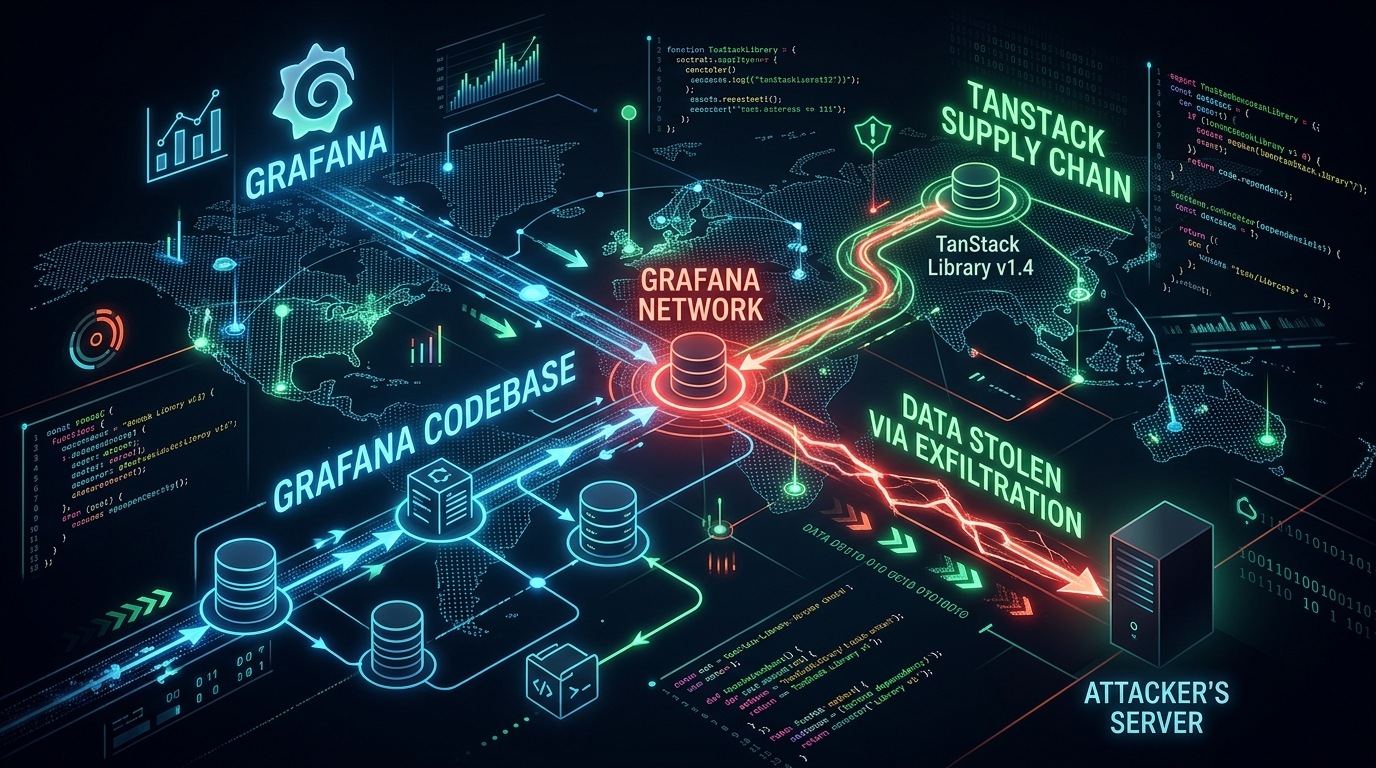
What Happened
We've grown accustomed to news of cyberattacks these days, but this one is a bit different. There's a company called Grafana you might not have heard of. They create dashboards that act as the 'health report' for the computer systems of large corporations, tech giants, and even governments, turning complex data into understandable graphs. On May 22, 2026, this important company confirmed some very troubling news: hackers stole some of its most valuable assets, namely the source code for its software.
The incident sent minor shockwaves through the tech world. This wasn't a case of thieves breaking down Grafana's digital front door. They took a much stealthier, more modern route. This is a textbook example of a 'supply chain attack,' one of the most frightening types of attacks in recent years. Instead of attacking the castle gates, the attackers chose to hide in a supply wagon heading into the castle. This made them nearly impossible to detect.
The Stolen Data
So, what exactly did the thieves get their hands on? According to Grafana's statement, the biggest loss is the company's source code. Think of it as the secret recipe for a restaurant chain's special sauce. Now, that recipe is in the hands of malicious actors. What does this mean? There are a few grim scenarios. Attackers can study this code line by line to find new, unknown security vulnerabilities. They could then use these vulnerabilities to attack the thousands of companies that use Grafana. They could even use the code to create fake, malicious versions of Grafana to distribute. This is a massive problem that jeopardizes not just the company's intellectual property, but also its future security.
Has your email been leaked? Check for free — results in seconds.
Check Now →The company also stated that 'other data' was stolen, but didn't provide many details on what this entails. In such cases, 'other data' often includes internal communications, project plans, technical documents, or perhaps some employee information. There is one piece of good news for now: Grafana has stated there is no evidence that customer databases, user passwords, or financial information were part of this breach. Nevertheless, the stolen source code acts as a sort of 'master key' for potential future attacks, which is enough to keep all Grafana users on edge.
How the Attack Happened
This is the most interesting and frightening part of the story. The attackers didn't directly assault Grafana's servers. They targeted a 'building material' that Grafana trusted and used. Let me explain: modern software developers don't write everything from scratch. That would take too much time and effort. Instead, they use ready-made code packages, or 'libraries,' written by other developers. It's like using pre-fabricated bricks, windows, or doors to build a house. It speeds up and simplifies the process.
Grafana, like many modern web applications, used libraries produced by a very popular company called 'TanStack.' The attackers infiltrated this very company. They somehow compromised a TanStack developer's account and hid malicious code inside one of those innocent-looking 'bricks.' Then, they packaged this poisoned brick as a 'new version update' and published it. Grafana's automated systems, as they always do, saw the update and thought, 'Ah, a new update from our trusted supplier,' and proceeded to download and use this toxic package in its own construction. From that moment on, the attackers were inside. This is the digital-age version of the Trojan Horse story.
This is called a 'supply chain attack,' and it's considered one of the most dangerous types of attacks today. Because you're being poisoned by a tool you trust and use every day. Detecting and preventing such attacks is much more difficult than dealing with direct assaults.
Who Is Affected
The first party directly affected is, of course, Grafana Labs itself. The company's brand reputation has taken a serious hit, its most valuable secrets are stolen, and they will now have to spend millions on investigation and system hardening.
However, the real major risk is for the tens of thousands of companies that use Grafana. Who are they? Banks, e-commerce sites, government agencies, power plants, airlines... Huge organizations from every conceivable sector rely on Grafana to monitor the real-time status of their systems and be alerted to problems instantly. If the attackers find a critical vulnerability in the stolen code, they will have a roadmap for attacking these companies. This, in turn, indirectly affects all of us, the ordinary users. If you're a customer of that bank, shop at that e-commerce site, or fly with that airline, the risk at the end of the chain can reach you.
And there's more. Besides Grafana, there could be hundreds, perhaps thousands, of other applications that also used that poisoned TanStack library and unknowingly incorporated the malicious code into their systems. No one yet knows the full scope of the damage and how far this attack has spread. We might only be looking at the tip of the iceberg.
What You Can Do
So, what can we do in this complex situation? Are our hands tied? Not entirely. There are steps you can take depending on who you are.
- If you work at a company that uses Grafana: Report this news to your IT or security department immediately. They need to waste no time in following Grafana's emergency bulletins, checking if their Grafana version is at risk, updating their systems to the latest secure version, and conducting a deep scan of their networks for any suspicious activity. This is the top priority right now.
- If you are a software developer: This incident is a harsh lesson for all of us. The era of blindly trusting third-party libraries is over. Implement 'dependency pinning,' a technique where you lock your project to a specific version of a library. Automatically pulling the 'latest' version, as you can see, carries significant risks. Also, use tools that regularly scan the packages you include in your project for security vulnerabilities. This is as fundamental as checking the expiration date on ingredients before you cook.
- As a regular internet user: News like this shows just how fragile and interconnected the digital world is. An attack on a library you've never heard of can affect a service you use, and therefore, you. That's why general digital security hygiene is more important than ever. Especially after major breaches like this, hackers often try to capitalize on the situation by sending 'phishing' emails. Be extremely wary of fake messages like, 'Your account is at risk due to the Grafana breach, click here to reset your password.' And most importantly: enable two-factor authentication (2FA) on every important service you use (email, social media, banking). It's your strongest shield, preventing access to your account without a code from your phone, even if your password is stolen.
What the Company Is Saying
In its public disclosure, Grafana Labs tried to adopt a transparent stance rather than hiding the situation. They openly confirmed the incident was a supply chain attack and pointed to a vulnerability in the TanStack library as the root cause. The company announced that they had immediately reset all passwords and security keys across their internal systems, hired a leading cybersecurity firm to investigate the incident, and are directly contacting customers who may be at risk. A statement from their CEO said, "The security of our customers and our systems is our highest priority. We have mobilized all our resources to understand the root causes of this incident and to prevent it from happening again." However, their continued silence on the content of the stolen 'other data' leaves some questions about the full extent of the incident unanswered.